
Dirt work before seed
Grading & Topsoil Prep in Omaha, NE
A grade that drains away from the house and a seedbed grass can root into.
- Site walk and a written estimate at no charge
- Seed blends picked for eastern Nebraska cool-season lawns
- Silt fence and inlet protection priced as their own line items
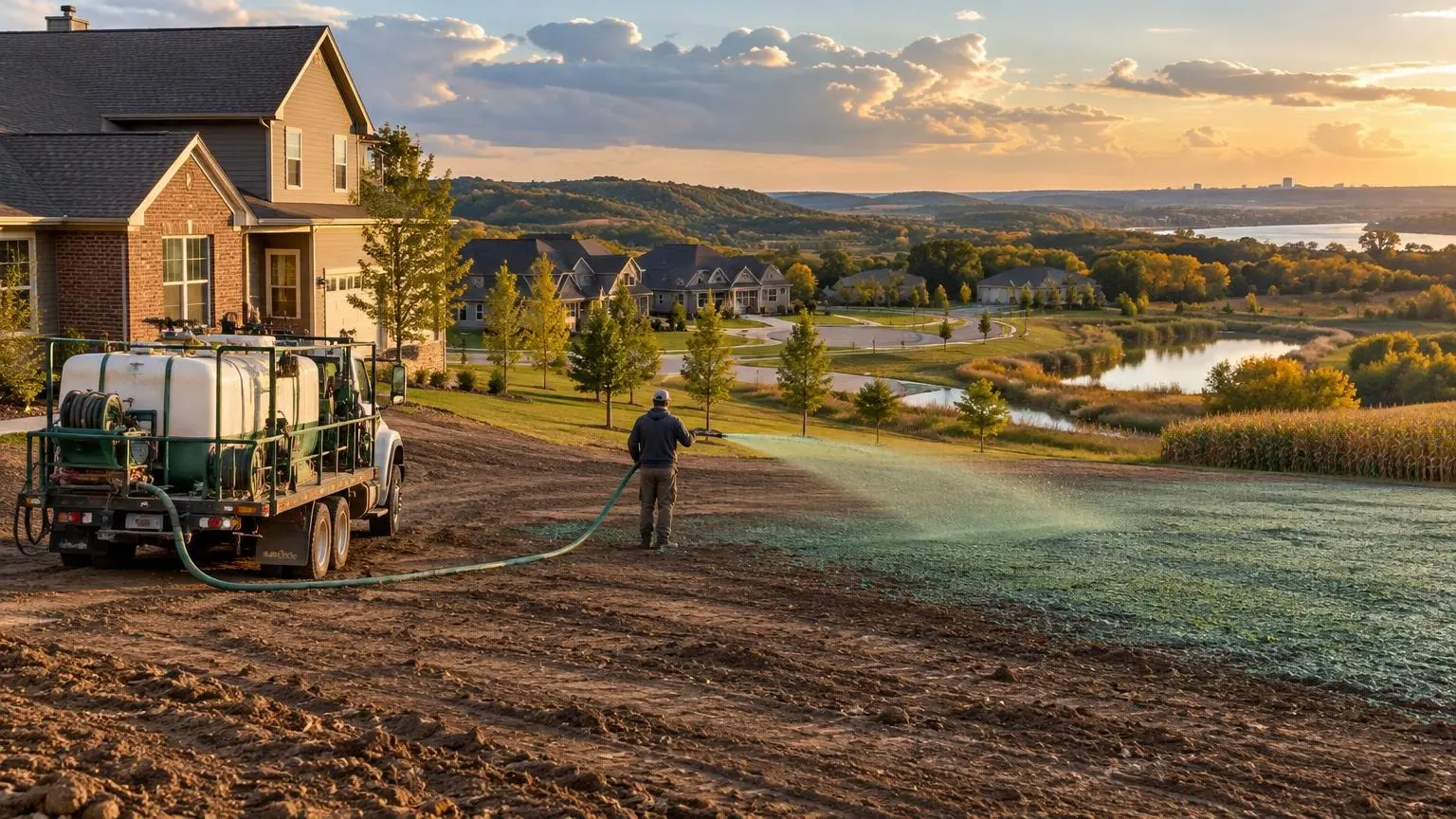
Seed Is Only as Good as the Ground Under It
Grading and topsoil prep is the groundwork that sets an Omaha lawn up to thrive or leaves it struggling for years. Much of the city's land has been reshaped by grading over its history, and every new subdivision adds more cut and fill. What a builder leaves behind is often a rough grade with compacted subsoil on top, ruts from equipment, buried debris and low spots that hold water near the foundation. We bring yards back to a smooth, draining surface, spread topsoil where it is needed, and get the seedbed ready for hydroseed.
Yard grading for drainage
The first job of a grade is to carry water off the foundation and out of the lot along a planned route. On a loess lot that matters more than usual, because silty soil softens when wet and can settle or wash where water collects. We check the fall away from the foundation, the swales between houses and the path to the street or the rear lot line. Where a yard slopes toward the house, holds a puddle, or sends a neighbor's water through your patio, we reshape it. The same crew digs and trenches for drainage fixes as well, such as burying downspout extensions or cutting a shallow swale.
Fine grading
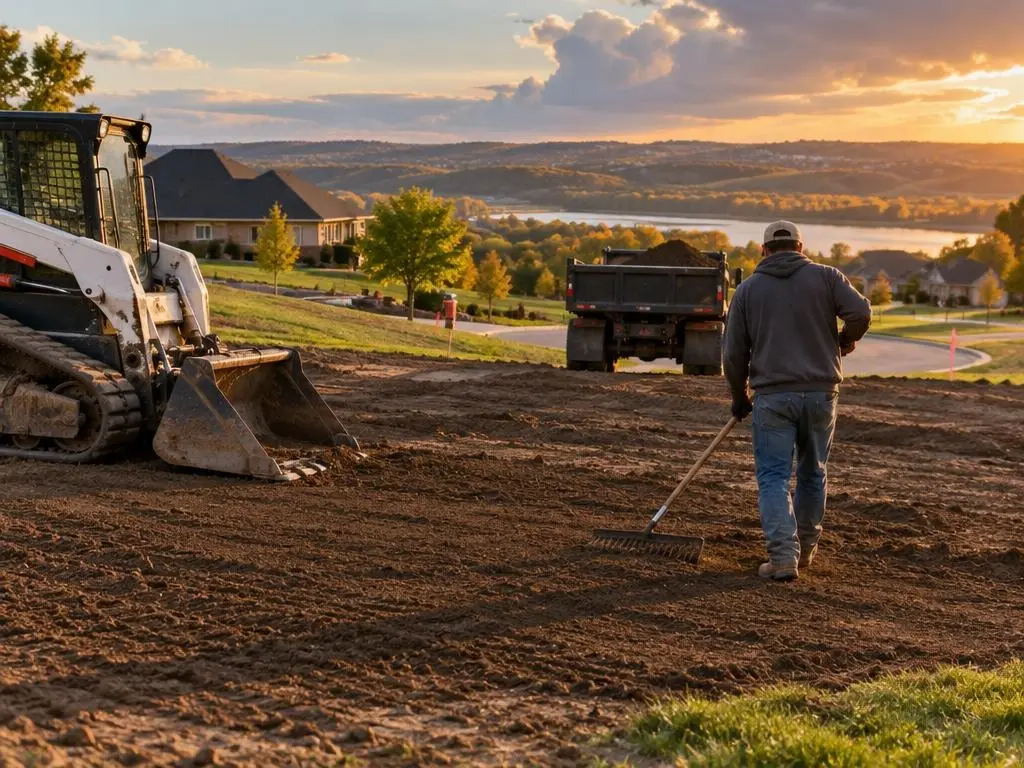
Rough grade gets water moving. Fine grading makes the surface smooth enough to mow and even enough that hydroseed lands in a uniform layer. We break up compaction, rake out rock and debris, fill ruts and set the final surface a bit below sidewalks and drives so the finished lawn sits flush. When a new yard turns out lumpy, scalps under the mower or has bare patches where seed washed into the low spots, a skipped fine grade is usually to blame.
Topsoil
When a lot has been stripped, the top layer is often the subsoil beneath the original prairie soil: paler, tighter and slower to take water. Grass will grow in it, but it roots shallower and dries out faster in Omaha's July heat. Spreading a few inches of screened topsoil and blending it into the surface gives seed a better start. We will tell you if the existing soil is good enough to skip topsoil; on some older city lots it is. Nebraska Extension notes that Nebraska soils are rarely low in phosphorus but recommends a starter fertilizer for seedlings, so we treat soil testing as useful but not always required.
Dirt work on larger sites
On acreages and commercial sites, land grading ranges from fine grading open areas for seed to reshaping ditches and basin slopes. We work from your plans where they exist and coordinate with the excavation contractor on who does what. Large earthmoving, foundations and utility trenches are usually the general contractor's or excavator's job; our focus is the last few inches before seed and the drainage details that come with it.
Timing the prep
For a late-summer seeding, the best time to grade is a week or two before, so the surface does not crust or sprout weeds before we spray. Nebraska Extension's recommended seeding window for cool-season grass in eastern Nebraska is August 15 to September 15, and that is the busiest stretch of the year. Booking grading in early August lets both pieces land on time. Grading wet loess smears and compacts it, so after heavy rain we wait for the soil to dry to a workable state.
What to expect on the estimate
Grading and topsoil are priced separately from seeding. Topsoil is usually material plus delivery plus spreading time, and grading is priced by area or by time and equipment. We list each one so you can see what the dirt work costs on its own.
Settled trenches and old yards
In established parts of the city, a lot of grading work is repair: a sewer or water service trench that has sunk a few inches, a strip along the foundation where backfill settled, or a low spot left after a tree was removed. These areas collect water, mow badly and often stay bare. We bring them back up with soil, compact it in layers so it does not sink again, and blend the edges into the lawn around them. Then the area is ready for hydroseed or overseeding to match the rest of the yard.
Before we dig
Any grading that goes more than a few inches below the surface, and any trenching for drains, starts with a utility locate request, and we wait for the marks before digging. We also ask about private lines the utilities do not mark, such as sprinkler pipes, low-voltage landscape lighting, invisible dog fence wire and gas lines to a grill or detached garage. Hitting those is the most common surprise on a yard grading job, and knowing where they run lets us work around them.
Grading and Soil Work
The prep we do before seed goes down.
Yard grading
Reshaping the lot so runoff drains off the foundation and out to the street or rear line.
Fine grading
Smoothing, raking out rock and debris and setting the finished surface for seed.
Topsoil delivery and spreading
Screened topsoil spread and blended on stripped or poor ground.
Swale and drainage fixes
Shallow swales cut or reshaped; trenching for downspout and drain lines.
Rut and settlement repair
Equipment ruts, settled trenches and low spots filled and compacted.
Land grading for acreages
Fine grading open areas, ditch lines and pond banks before seeding.
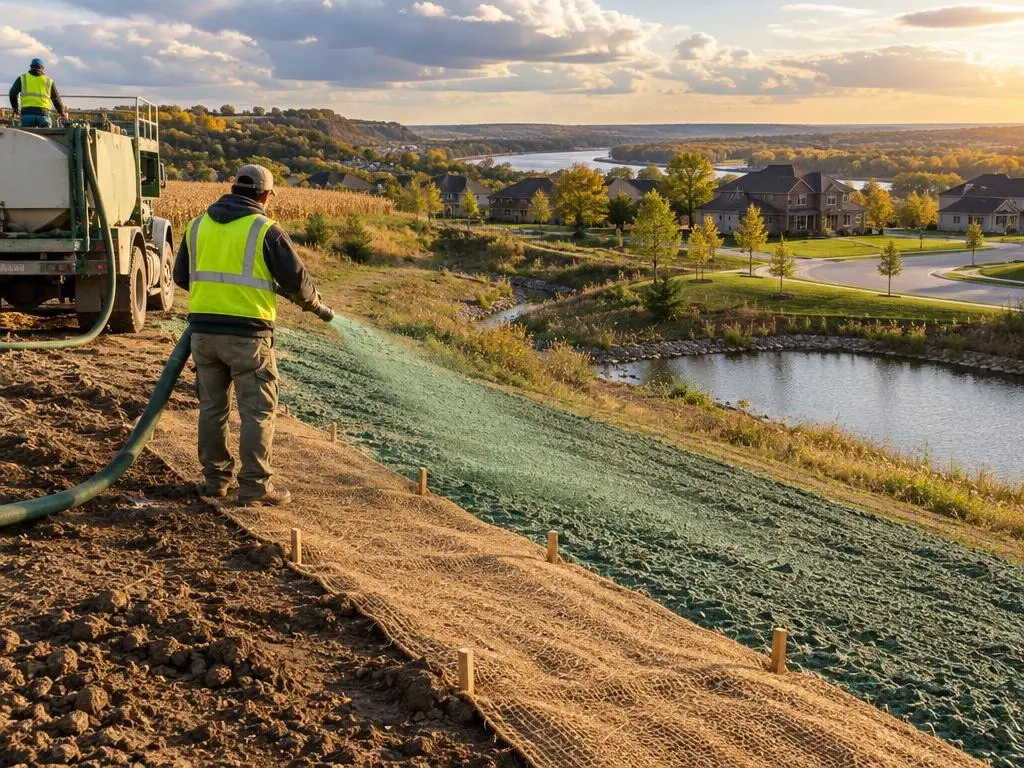
Published Grading and Topsoil Ranges
| Work | Published range |
|---|---|
| Lawn leveling, per sq ft (HomeAdvisor) | $1 to $2 |
| Fine grading, per sq ft (Lawn Love) | $0.08 to $1.00 |
| Residential resloping project (Lawn Love) | $770 to $3,000 |
| Grading labor, per hour (HomeAdvisor) | $50 to $100 |
| Topsoil, per cubic yard (Angi) | $10 to $55 |
| Angi hauling fee for topsoil, a single load up to 15 cu yd | $50 to $150 |
| Topsoil spreading labor, per hour (Angi) | $60 to $125 |
National ranges from published cost guides. Lot size, access, how much soil moves and how much topsoil is needed all shift the total. Averages only. Your written estimate from us sets the bill.
How Prep Work Goes
1. Check the grade
We look at fall from the house, swales, low spots and where water leaves.
2. Rough corrections
Reshape the lot and fix drainage paths, including any short trenching.
3. Topsoil
Deliver and spread topsoil where needed and blend it into the surface.
4. Fine grade
Smooth, rake and set the surface for an even coat of seed.
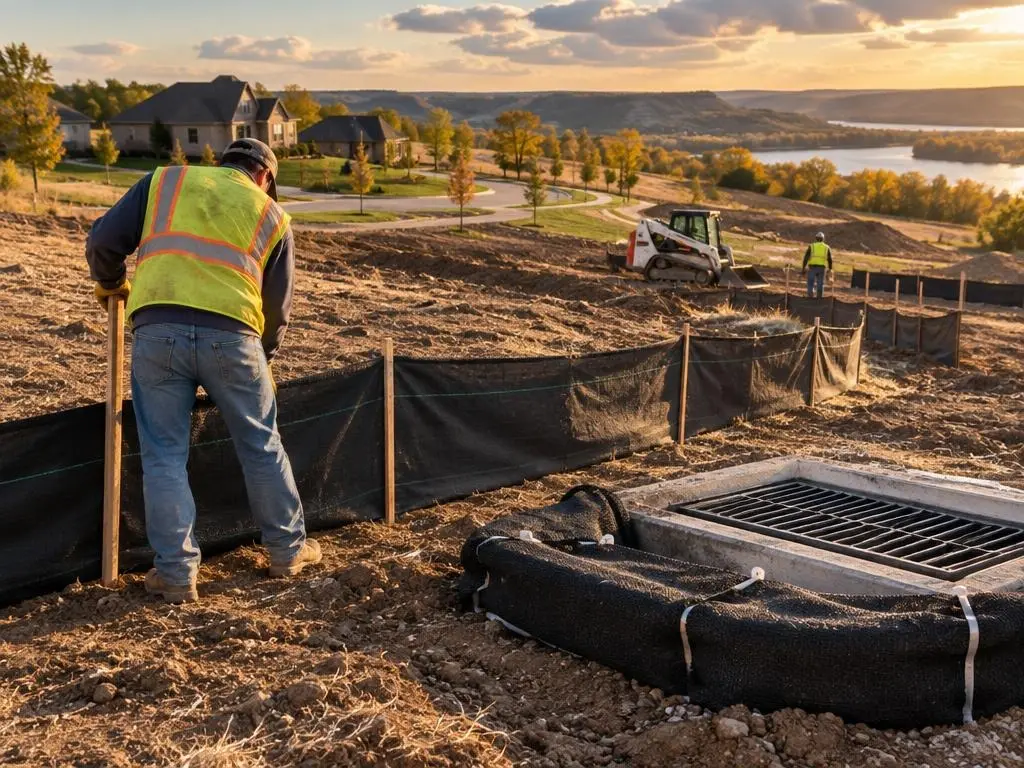
Why Choose Us for Grading & Topsoil Prep
Drainage before looks
We fix where water goes before we make the surface pretty.
Separate lines
Grading, topsoil and seeding each have their own price on the estimate.
We do not grade wet loess
We wait for workable soil instead of smearing a wet surface.
Grading & Topsoil Prep Questions
Do I need topsoil before hydroseeding?
Not always. If the surface is native soil in decent shape, seeding directly works. If the builder left pale, compacted subsoil or fill on top, topsoil gives the grass a much better start.
How much should my yard slope away from the house?
Your local building code and your builder's plan set the requirement. The goal is a steady fall away from the foundation, with no low spots that hold water next to the house.
Can you fix drainage between my house and the neighbor's?
Often, yes, by reshaping the side-yard swale and handling downspout water. If the problem crosses property lines, both owners usually need to agree on the fix.
Do you do excavation and trenching?
We handle the shallow excavation and trenching that drainage and seeding prep need. Foundations, deep utility work and large earthmoving are for an excavation contractor.
Grading & Topsoil Prep Service Areas
- Hydroseeding in Omaha, NE
- Hydroseeding in Bellevue, NE
- Hydroseeding in Papillion, NE
- Hydroseeding in La Vista, NE
- Hydroseeding in Gretna, NE
- Hydroseeding in Elkhorn, NE
- Hydroseeding in Council Bluffs, IA
- Hydroseeding in Ralston, NE
- Hydroseeding in Springfield, NE
- Hydroseeding in Blair, NE
- Hydroseeding in Fremont, NE
- Hydroseeding in Plattsmouth, NE
- Hydroseeding in Valley, NE
- Hydroseeding in Glenwood, IA
- Hydroseeding in Ashland, NE
- Hydroseeding in Carter Lake, IA
- Hydroseeding in Fort Calhoun, NE
- Hydroseeding in Crescent, IA
- Hydroseeding in Waterloo, NE
- Hydroseeding in Missouri Valley, IA
Get a Grading & Topsoil Prep Estimate
Free grading and soil checks before your seeding.