
For builders, developers and site contractors
Builder & Commercial Hydroseeding in Omaha, NE
Large-area seeding and mulch for grading phases, finished lots and final stabilization.
- Site walk and a written estimate at no charge
- Seed blends picked for eastern Nebraska cool-season lawns
- Silt fence and inlet protection priced as their own line items
Seeding by the Acre on Active Sites
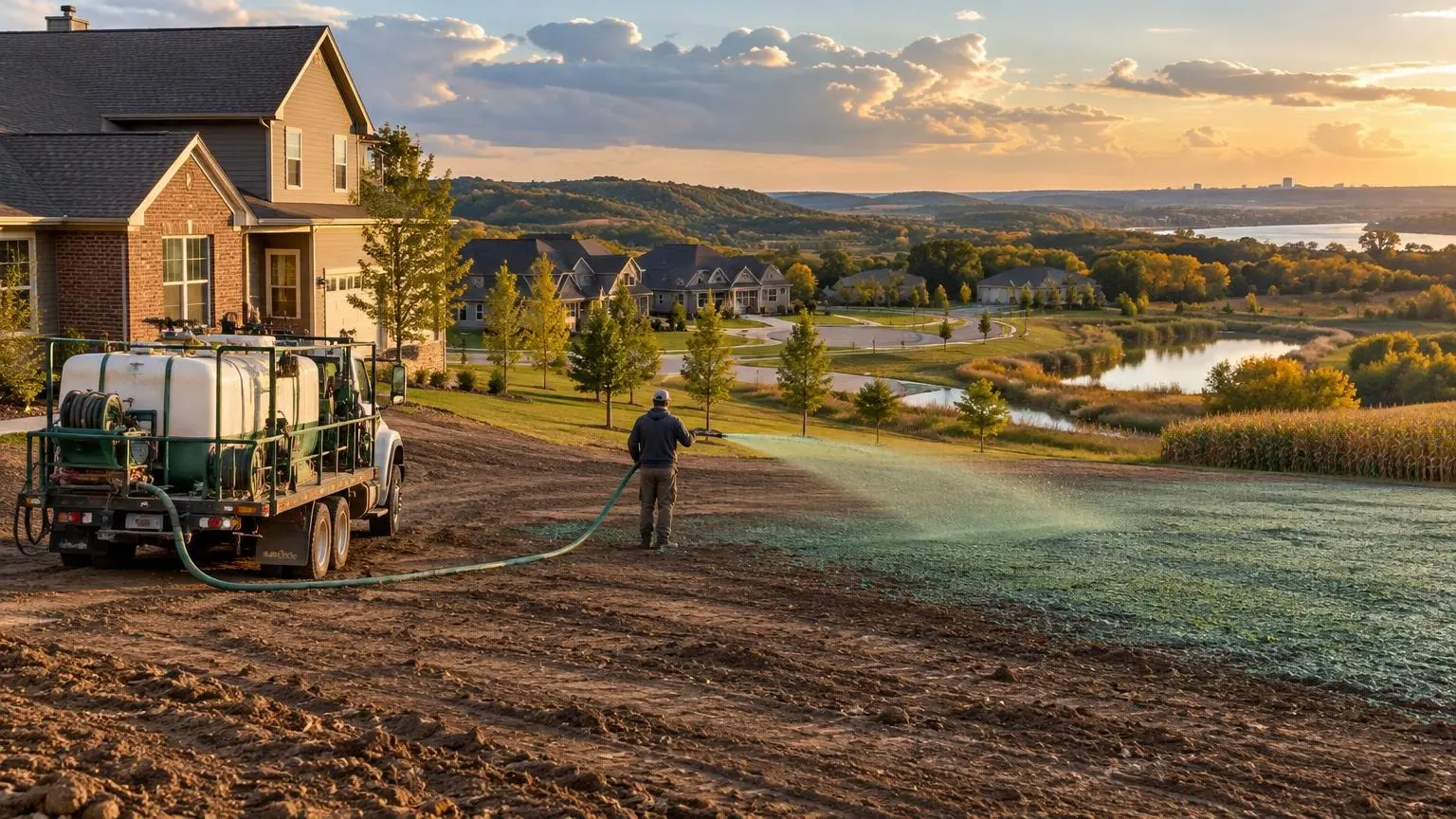
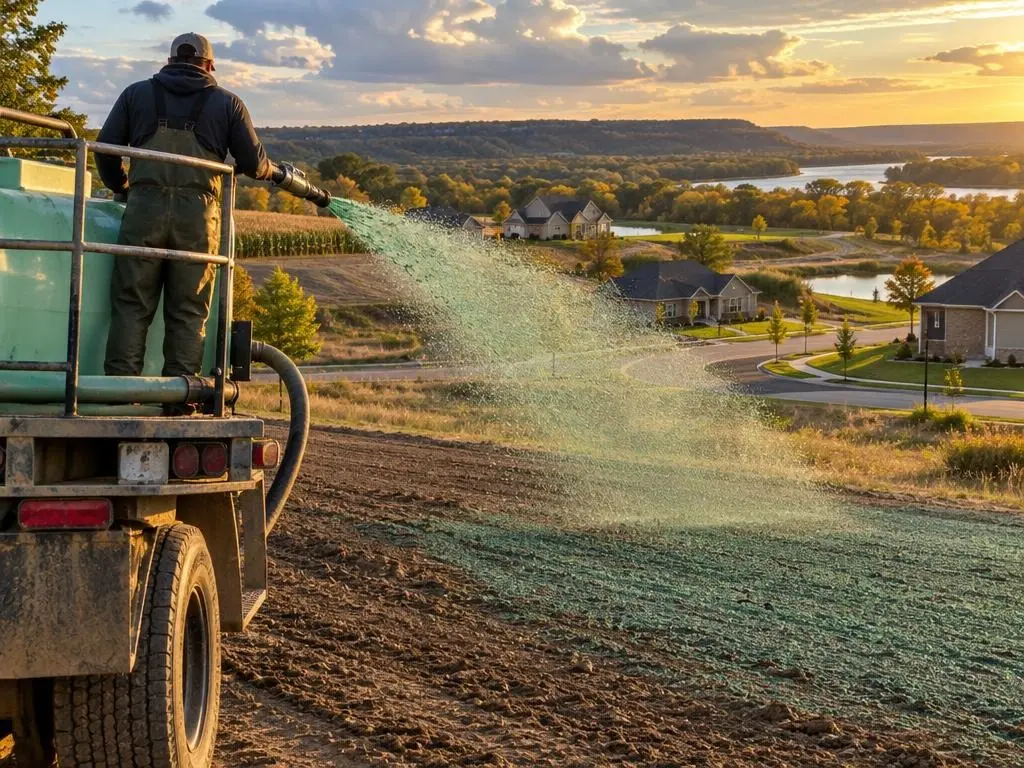
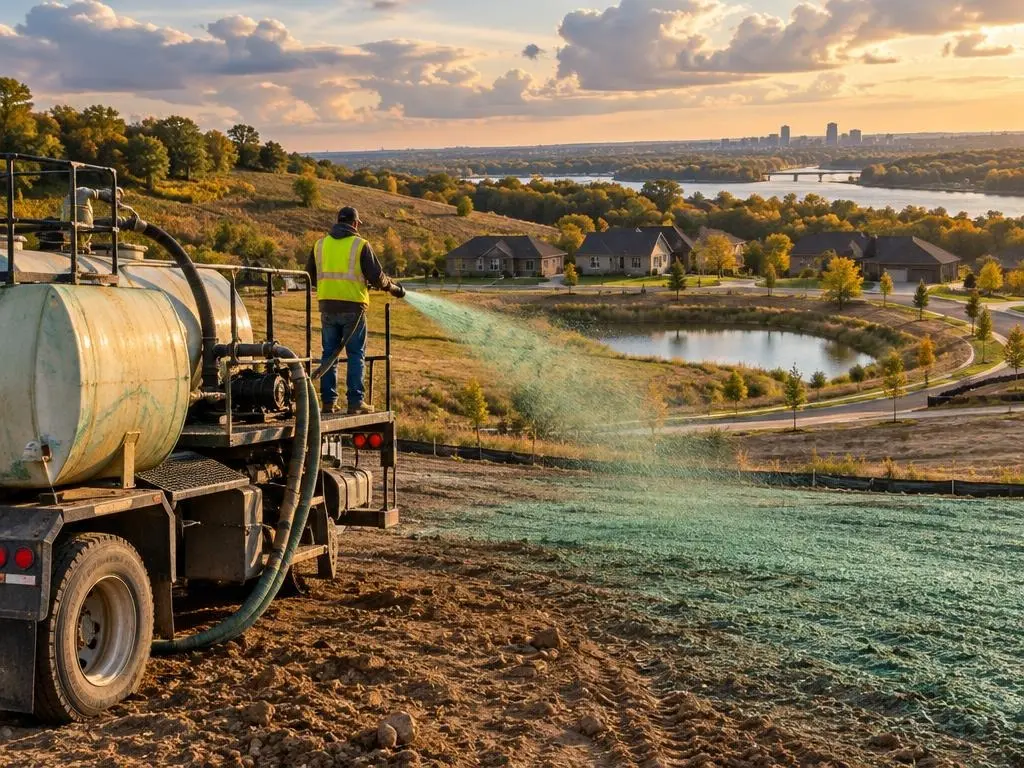
Builder and commercial hydroseeding in Omaha fills the gap between the grading crew and the finished project: subdivision common areas, house lots in bulk, retail and office pads, detention basins, road shoulders and utility corridors. Hydroseeding contractors earn their keep on these jobs by covering a lot of disturbed soil quickly and evenly, often in tight windows set by a schedule or an inspector. We spray seed and mulch from the truck over large open areas and use hose runs to reach backs of lots, basin side slopes and strips along curbs.
Why stabilization matters here
Much of the developing land around Omaha drains into the Papillion Creek system. The watershed covers 402 square miles in Washington, Douglas and Sarpy counties and runs southeast to the Missouri River through the Little, Big and West Papillion creeks. The Papillion Creek Watershed Partnership's permit page lays out the rules: any project disturbing one acre or more, or less if it is part of a common plan of development or sale, needs coverage under Nebraska's construction stormwater general permit, a stormwater pollution prevention plan, a notice of intent filed with the state at least seven days before grading, and a local grading permit. City of Omaha staff monitor grading-permit sites for compliance. At the end of the project, the plan has to show the ground is stabilized before the permit is closed out.
Temporary and permanent seeding
Not every acre on a site needs a lawn. A stockpile, a future phase or a pad waiting on a building may only need temporary cover to hold the soil through a season. A quick-germinating cover crop under hydromulch does that job. Finished common areas, basins and parkways need a permanent mix. For detention basins and outlots we often use native or low-maintenance grasses that do not need mowing every week; for front yards and parkways it is a turf-type tall fescue blend suited to eastern Nebraska. We follow the seed mix in your plans or specs when one is called out.
Working with the schedule
Loess soil on a freshly cut slope can lose its face in one heavy storm, and Omaha's normals show more than four and a half inches of precipitation in each of May, June and August. The longer a graded phase sits bare, the more silt fence repairs and inlet cleanouts it costs. We try to seed areas as soon as they reach final grade rather than waiting for the whole site to be finished. For builders, that can mean a short visit every week or two during a busy phase instead of one big seeding at the end.
Bulk lots for home builders
A lot of our builder work is house lots in batches: the front and back yards of six or eight homes nearing closing in Gretna, Elkhorn or Papillion subdivisions. We coordinate with your superintendent on which lots are graded and ready, set the seeding order so trucks are not crossing finished yards, and keep a record of what was seeded on what date. That record helps when a buyer asks why a yard is not green yet in week two.
Mulch, rate and slope
On flat pads and gentle ground, a wood or paper fiber hydromulch at a standard rate is enough. On basin side slopes, berms and channel banks, we raise the rate or move to a heavier product and add an erosion control blanket where the plan or the grade calls for it. For a sense of what the mulch layer alone runs on agency work, a 2025 DOT unit-cost table puts hydraulic wood fiber mulch at $98 for each 1,000 square feet. The table below shows other published ranges.
Choosing between hydroseeding companies
Ask who handles the stuff around the seeding: grade touch-up, topsoil, blankets, silt fence repairs and inlet protection. Ask how they water, or whether watering is on you. Ask what happens if a storm hits before germination. We answer those in writing on the estimate, so you know what you are paying for and what you are not.
Water on big areas
Watering is the weak point of most commercial seeding. A builder's common area or a basin side slope rarely has irrigation, and a water truck is expensive. That is one reason we push hard to seed big areas in the late-summer window, when Omaha's fall weather is usually cooler and wetter and Nebraska Extension describes September through late November as ideal for cool-season growth. A heavier mulch rate also holds more moisture at the surface. On sites where the schedule forces a summer seeding, we talk through temporary cover now and permanent seeding in the fall, which often costs less than trying to keep a full lawn mix alive through July with a tanker.
Commercial Scope
Typical pieces of a builder or commercial seeding job.
Subdivision common areas
Outlots, entry features, parkways and trail corridors seeded after final grade.
Bulk house lots
Front and back yards on several homes at once, scheduled with the builder.
Detention basins and channels
Side slopes, bottoms and outlets seeded with mulch or blankets as specified.
Temporary cover
Quick cover seeding with hydromulch on stockpiles and idle phases.
Building pads and road shoulders
Final stabilization around new commercial buildings and along new streets.
Seeding records
Dates, areas and products for your stormwater plan and inspection file.

Published Ranges for Larger Hydroseeding Jobs
| Work | Published range |
|---|---|
| Hydroseeding per acre (LawnStarter) | $2,136 to $4,897 |
| Hydroseeding per acre (Fixr) | $2,000 to $4,000 |
| 1 acre (HomeAdvisor) | $2,600 to $8,700 |
| 1 acre (HomeGuide) | $5,000 to $8,500 |
| Arkansas municipal park seeding bids, per acre (North Little Rock, 2023) | $2,595 and $3,325 |
| Wood fiber hydromulch only, each 1,000 sq ft (a 2025 DOT unit-cost table) | $98 |
Ranges come from national cost guides and public bid documents, not Omaha quotes. Acreage, access, seed mix and mulch rate set the real number. Averages only. Your written estimate from us sets the bill.
How Site Work Runs
1. Plans and walk
We review the grading and stormwater plans and walk the areas ready for seed.
2. Estimate by area
Acres or square feet by area type, with seed mix, mulch rate and blankets listed.
3. Schedule by phase
Areas seeded as they reach final grade, not all at the end.
4. Apply
Truck and hose application with edges kept off pavement and inlets.
5. Records
Dates and areas sent to you for your inspection file.
Why Choose Us for Builder & Commercial Hydroseeding
Seeding that matches the plan
We follow the seed mix and rates in your specs when they are called out.
Phased visits
Short return trips keep finished areas from sitting bare.
Perimeter work in-house
Silt fence, inlet protection and blankets come from the same crew.
Builder & Commercial Hydroseeding Questions
Do you work for general contractors and home builders?
Yes. Much of our commercial work comes from builders and site contractors who need disturbed areas covered on a schedule.
Can you follow the seed mix in our plans?
Yes. If the plan or specs name a mix, rate or mulch, we price and apply to that.
Do you handle temporary seeding?
Yes. Stockpiles and idle phases can get a quick cover crop under hydromulch to hold soil until final grading.
What does commercial hydroseeding cost per acre?
Published guides range from about $2,000 to $8,700 per acre depending on the source and conditions. Mulch rate, blankets, access and travel between areas change the number. We price from your plans and a walk.
Builder & Commercial Hydroseeding Service Areas
- Hydroseeding in Omaha, NE
- Hydroseeding in Bellevue, NE
- Hydroseeding in Papillion, NE
- Hydroseeding in La Vista, NE
- Hydroseeding in Gretna, NE
- Hydroseeding in Elkhorn, NE
- Hydroseeding in Council Bluffs, IA
- Hydroseeding in Ralston, NE
- Hydroseeding in Springfield, NE
- Hydroseeding in Blair, NE
- Hydroseeding in Fremont, NE
- Hydroseeding in Plattsmouth, NE
- Hydroseeding in Valley, NE
- Hydroseeding in Glenwood, IA
- Hydroseeding in Ashland, NE
- Hydroseeding in Carter Lake, IA
- Hydroseeding in Fort Calhoun, NE
- Hydroseeding in Crescent, IA
- Hydroseeding in Waterloo, NE
- Hydroseeding in Missouri Valley, IA
Get a Builder & Commercial Hydroseeding Estimate
Send plans or a site address for a written commercial estimate.